photography · portrait
What I Learned from Avedon
In 1957 Avedon lied to the Duke and Duchess of Windsor to get their portrait. Notes on portraiture, with Irving Penn on the other side.
Almost everything I start begins with a question I can't answer.
Every Thursday for a while now I've had a weekly call with Gokostudio, an architecture studio in Barcelona I collaborate with. In last Thursday's meeting, Bettina asked me about a portrait of a sad moment. Not about the light or the framing, about the feeling behind it. I kept turning it over.
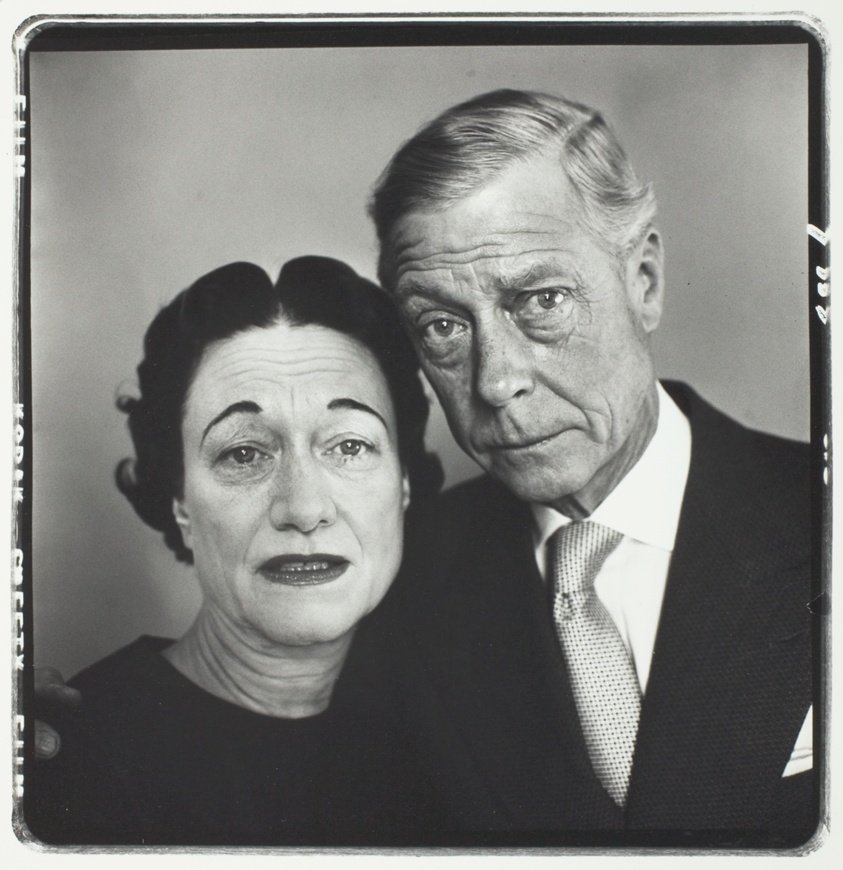
What came back to me was the story of the Windsors' pugs in the portrait session Richard Avedon did.
There are photographers I admire (and have tried to imitate, without much success). Several. Each with their own thing. LaChapelle comes to mind for his use of color, Raota for his contrasts, Andy Cherniavsky for her spontaneity, Robert Capa for his famous line: "If your pictures aren't good enough, you're not close enough." Also Elliott Erwitt for his street portraits and dogs. Avedon is the one I always cite to understand what he did with the people in front of him.
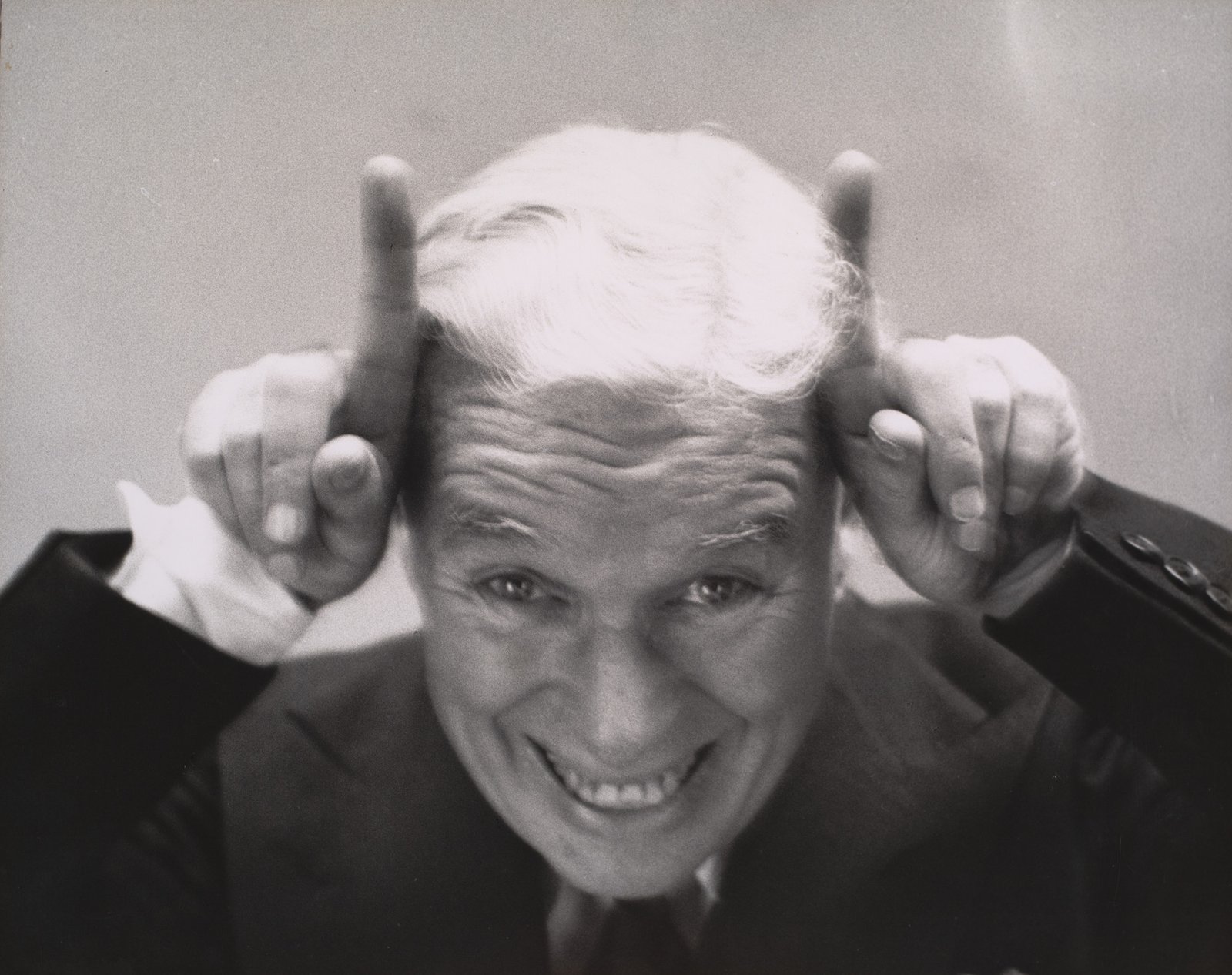 Charlie Chaplin leaving the United States, New York, 1952. © The Richard Avedon Foundation, via MoMA.
Talking while shooting
For In the American West he used an 8x10 Deardorff, natural light and a roll of seamless white paper he carried to every location. A view camera forces you to compose and focus on the ground glass, then slide in the film holder, which blocks that same image. Once loaded, looking through the back is useless.
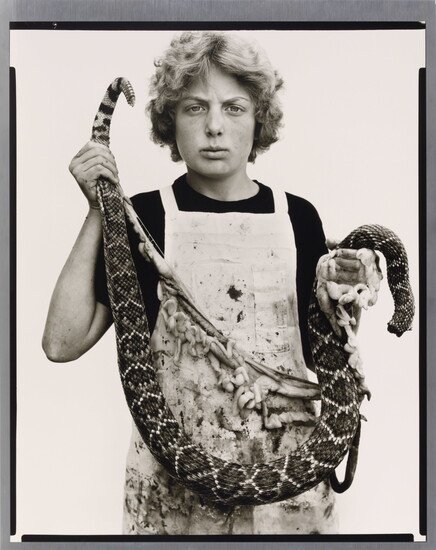
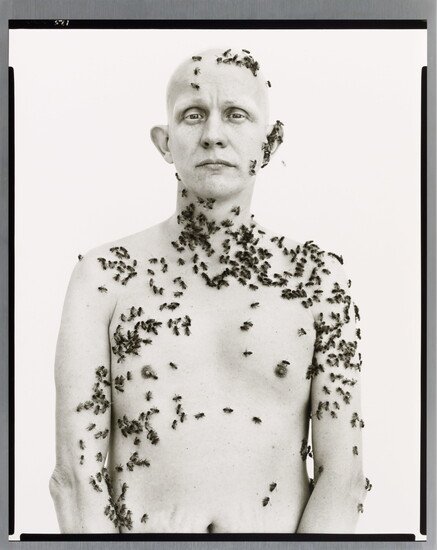 Left: Boyd Fortin, thirteen-year-old rattlesnake skinner, Sweetwater, Texas, 1979. Right: Ronald Fischer, beekeeper, Davis, California, 1981. From In the American West. © The Richard Avedon Foundation, Amon Carter Museum collection.
Avedon turned that limitation into method: he stood beside the camera, not behind it, and fired with a cable release while holding the other person's gaze and talking to them. Everything mechanical gets solved beforehand, so the moment can be the moment. In his reading of surfaces he looked at a neck, a clenched jaw, a pair of hands, and built an opinion out of that. His portraits are statements about someone. That's why they unsettle, and that's why he was accused of cruelty all his life.
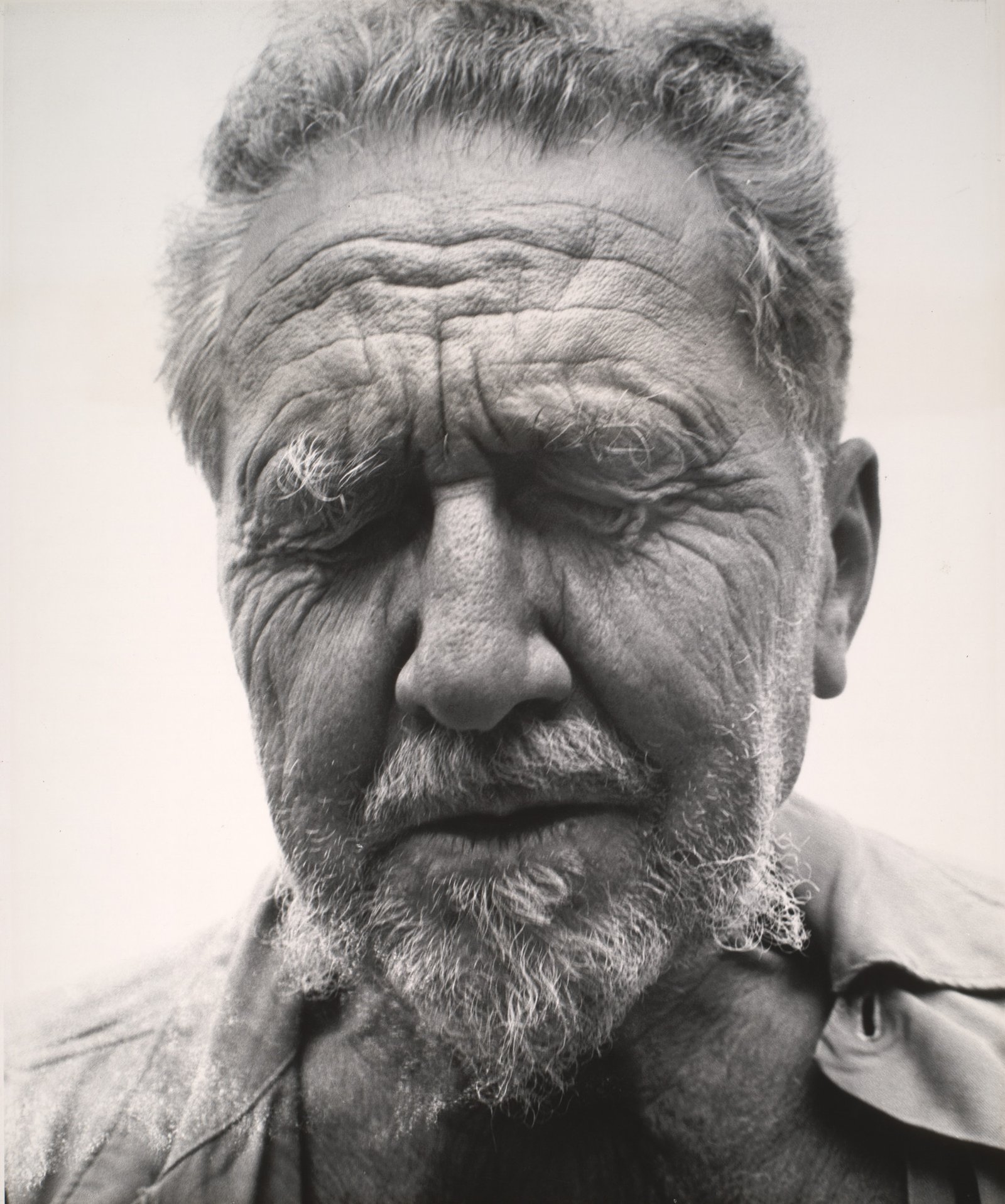 Ezra Pound, poet, 1958. © The Richard Avedon Foundation, via MoMA.
1957, New York. He gets the assignment to photograph the Duke and Duchess of Windsor, who were Edward VIII and Wallis Simpson. Two people with decades of practice at looking good on camera, smiles rehearsed before posing. The Duchess had always been devoted to pugs, and Avedon knew it. He told them the taxi that brought him over had just run over a dog. It was a lie. The Windsors crumpled in horror and he fired. The photo was an international scandal and British monarchists hated it. Avedon defended the move by saying his photos showed what people were really like. His crooked procedure worked. Facing someone trained to pose, the polite photographer goes home with a photo of the pose.
The feeling behind that photo isn't Avedon's: it's the one he went looking for. He chose what that couple was going to feel at the exact moment of the shot. That's directing. That he chose horror, and that he lied to get it, is another discussion.
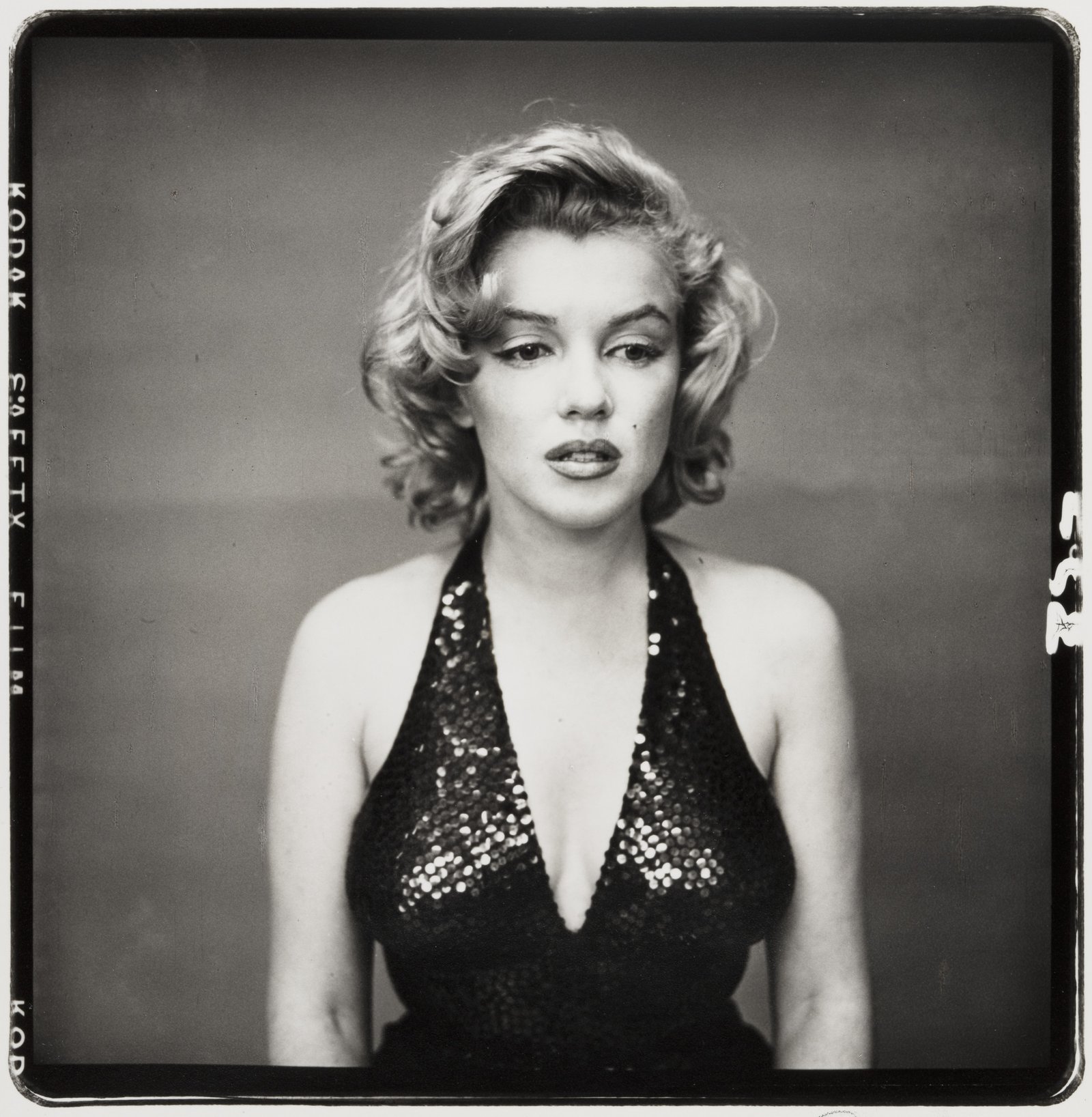 Marilyn Monroe, New York, 1957. The session was over. Avedon didn't put the camera away. © The Richard Avedon Foundation, via MoMA.
Knowing something about the other person before you start, or asking a question that's off the script, matters as much as having the gear ready and the light in place.
Penn, the other road
Avedon doesn't fully make sense without Irving Penn. They were contemporaries, did the same work for the same magazines and reached opposite results starting from the same problem.
The problem is this: once you've stripped the set away, how do you hold the person there? Avedon solved it by talking. Penn solved it with architecture.
Around 1948 Penn started shooting portraits inside a small corner built from two studio flats set at an angle. He put Duchamp in there, Capote, Dalí, and left them there. He said the confinement seemed to calm people, that the walls were something to lean on or push against, and that limiting the sitter's movement freed him from having to hold them up.
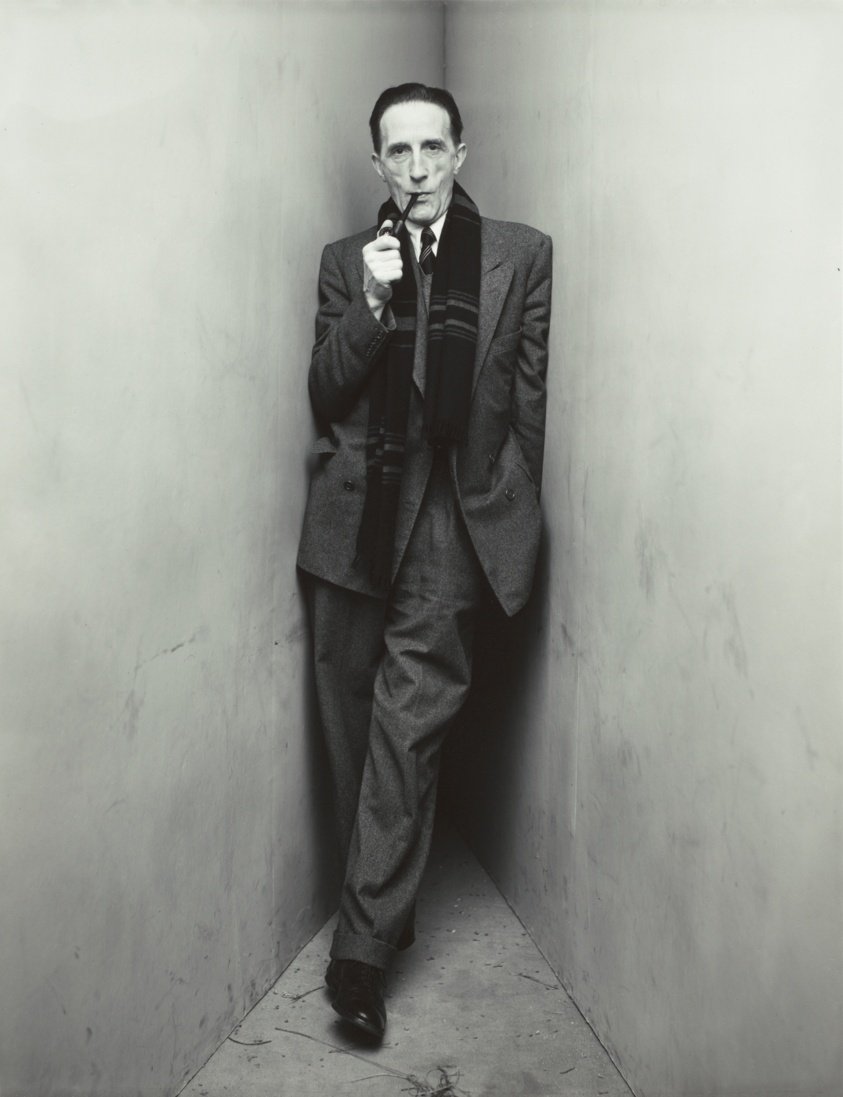 Marcel Duchamp in Penn's corner, New York, 1948. © The Irving Penn Foundation, via Art Institute of Chicago.
Both seem fair to me. The difference is what comes naturally to you. If you're the quiet kind, Penn's road is more honest than forcing a conversation you don't have in you.
The tripod
I have a tripod that belonged to Penn. It was a gift from John Sann, who assisted him, and Penn gave it to him when he left. It's not a display piece, I use it.
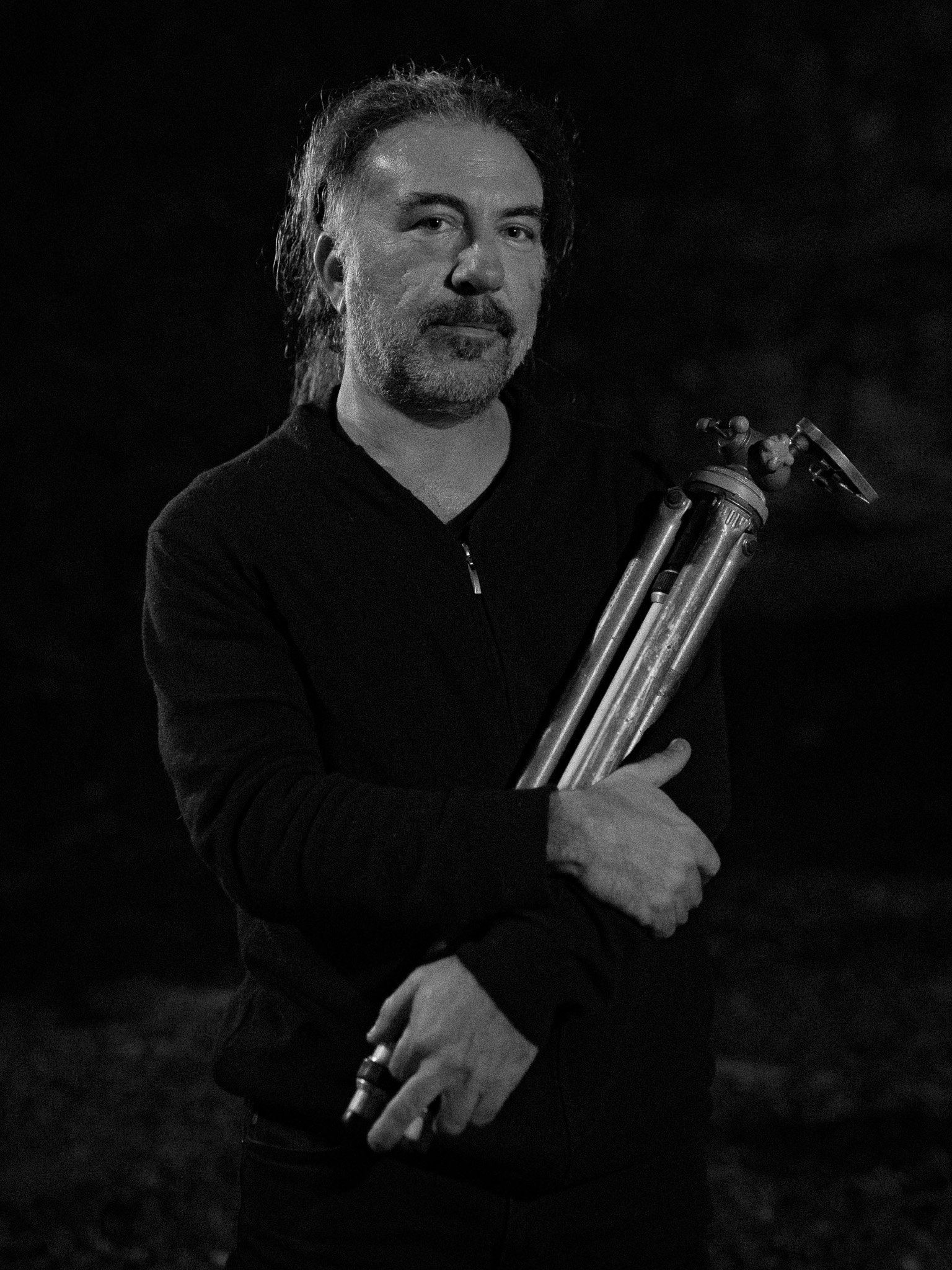 Penn's tripod. Photo: Daniela Silicz.
What I take with me
- Solve the technical side before the person sits down. The moment is for looking, not calculating.
- Step out from behind the camera. If you can direct standing beside it, direct standing beside it.
- Arrive with an idea about the other person. Without an opinion there is no portrait.
- The smile is a defense. Almost never the goal.
- Less set dressing. An empty background isn't a lack of resources, it's a decision about where the viewer will look.
- Pick your method. Talk like Avedon or box them in like Penn, both work. Trying more things is what experience is.
So the short answer to the opening question is that the feeling a portrait suggests is put there by the photographer before the shutter fires, or by no one. Thanks for the question.
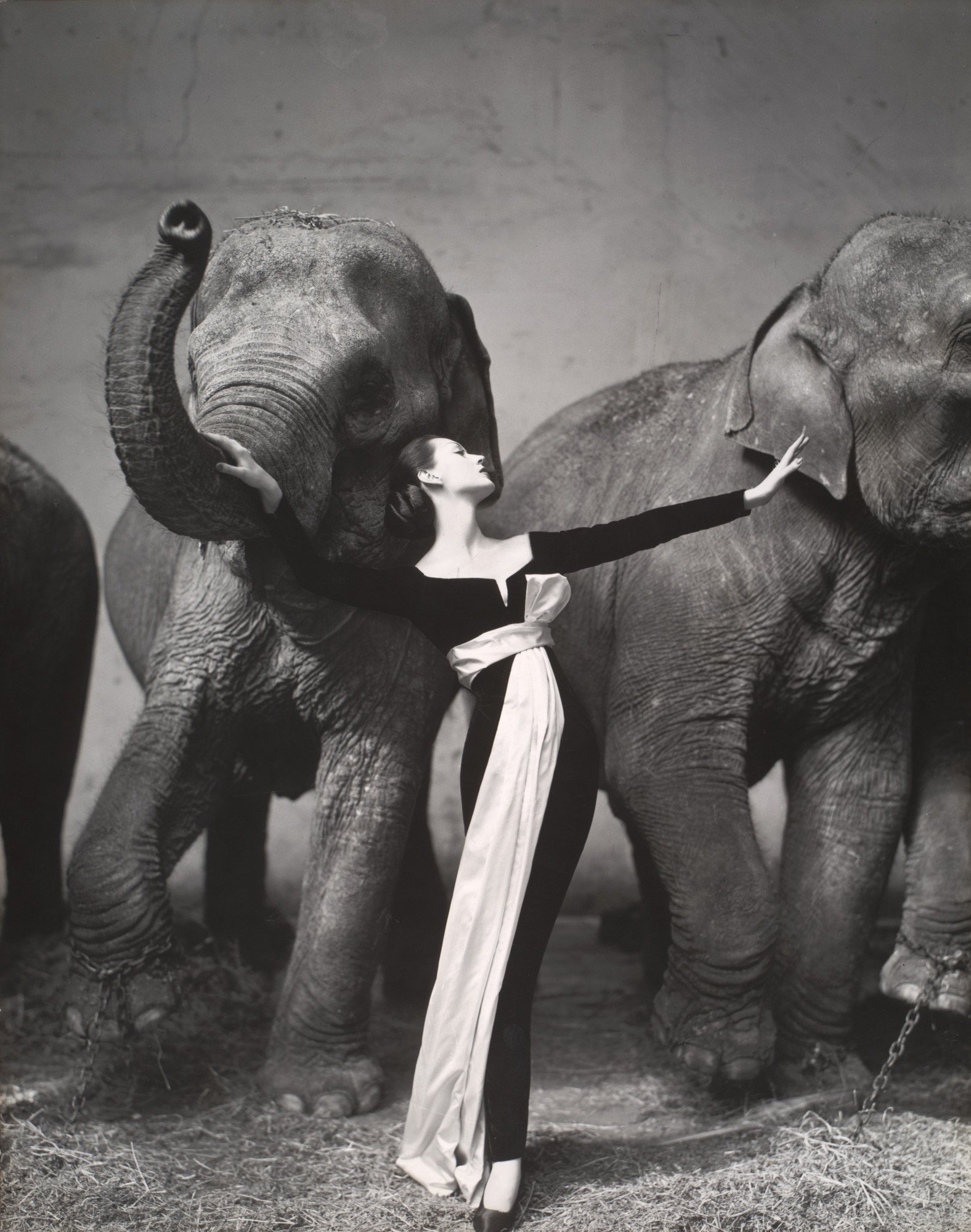 Dovima with elephants, Dior dress, Cirque d'Hiver, Paris, 1955. © The Richard Avedon Foundation, via MoMA.
Sources
- The Richard Avedon Foundation, biography and Magazines section
- Amon Carter Museum of American Art, In the American West collection entry
- Gagosian, Ten Exhibition Prints from In the American West (2021)
- Britannica, Richard Avedon entry
- Threepenny Review, On Avedon (the Windsor anecdote as Diane Arbus used to tell it)
- The Irving Penn Foundation, biography and galleries
- Fraenkel Gallery and Hamiltons Gallery, on the corner portraits and Small Trades
- MoMA and the Art Institute of Chicago, collection entries for the photographs reproduced